Blossom Magazine
Student fashion magazine, University of South Carolina
Blossom Magazine, taken apart
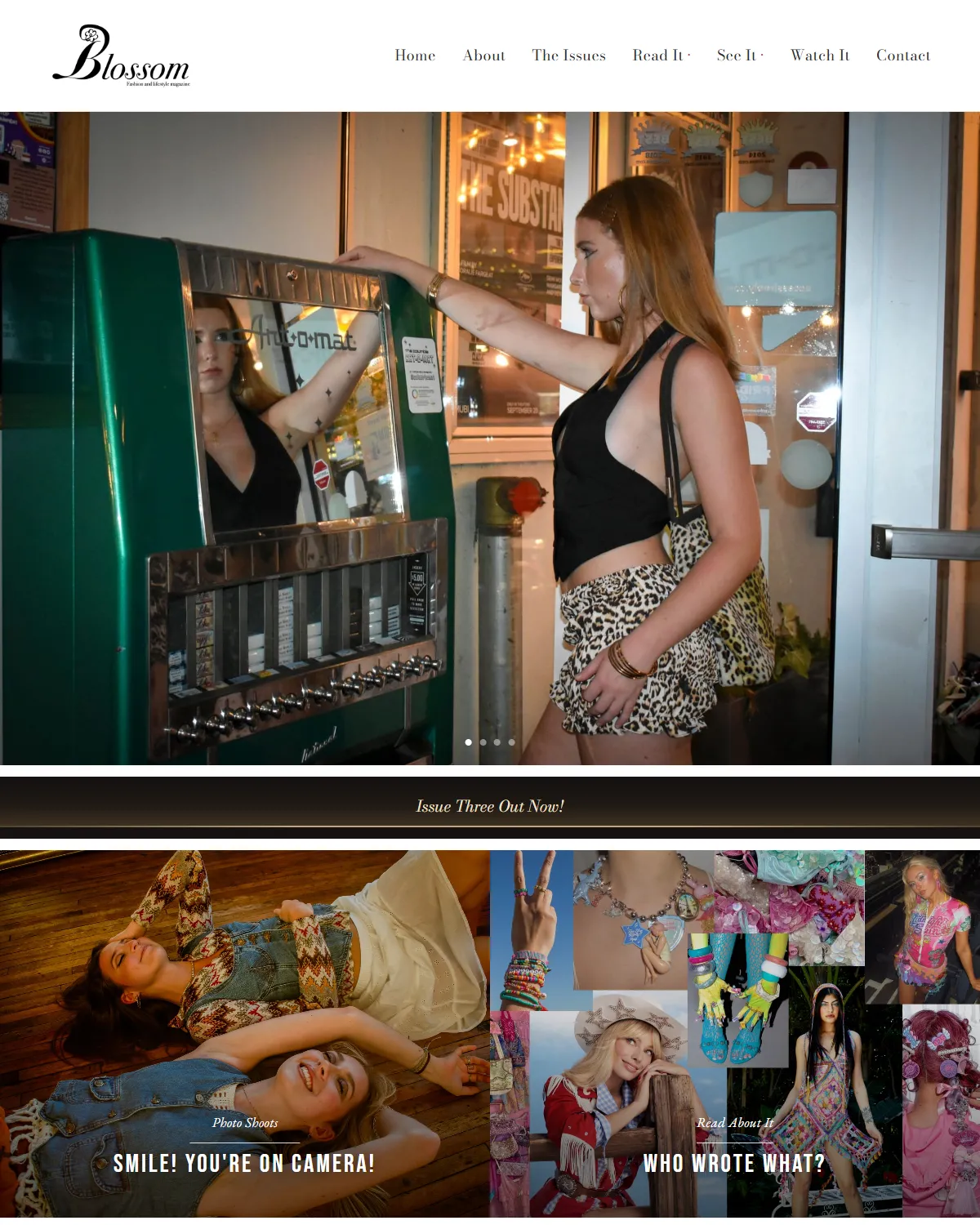

- What it is
- The magazine’s public site, and the studio its staff run it from
- Built to
- Give a staff that changes every year no-code tools, and take the busywork out of making an issue
- Live at
- blossommagazinesc.org
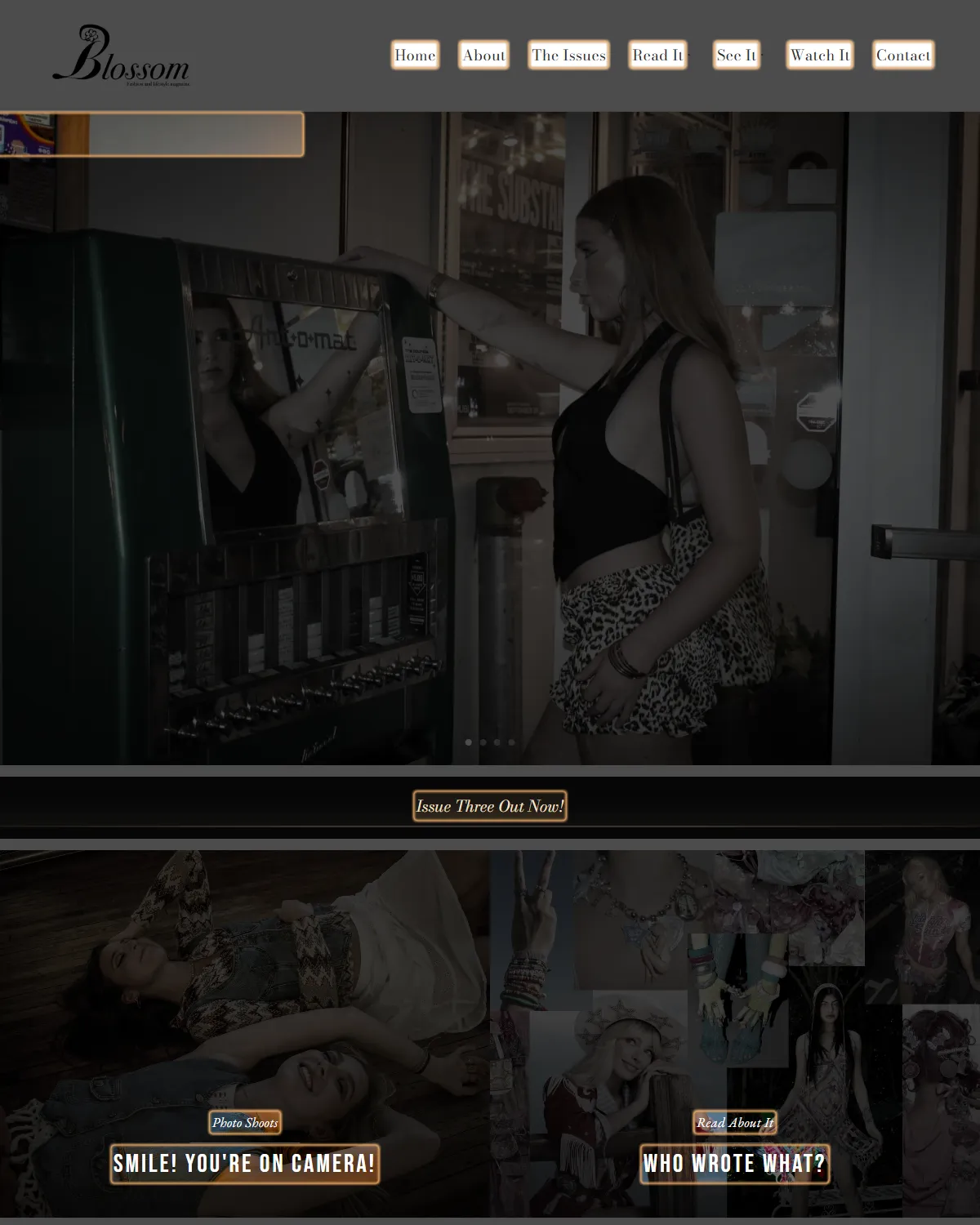
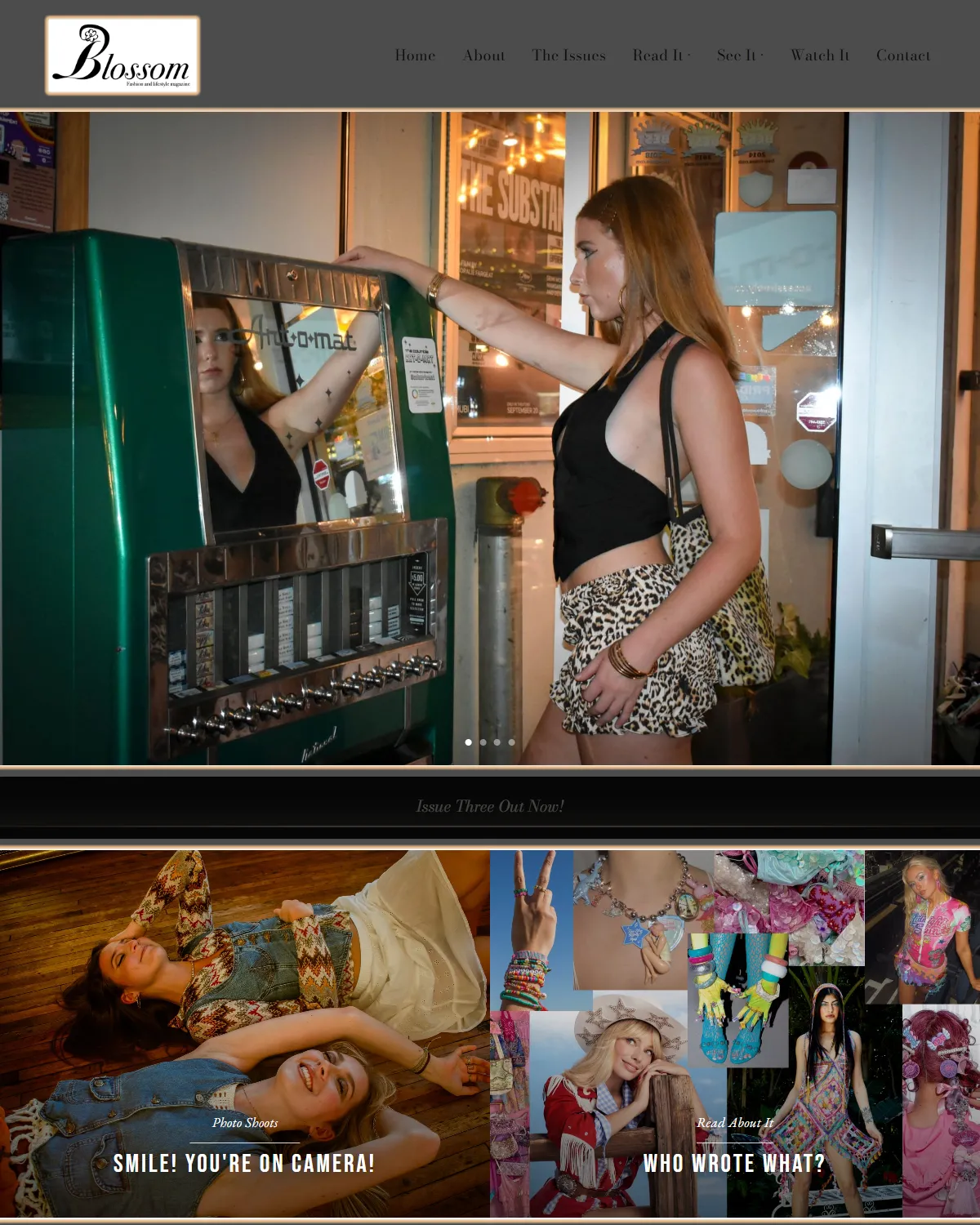
The home page, captured November 20, 2026. Blossom’s name, wordmark, and photographs belong to Blossom and the people credited.
1The public site
The issues, the articles, and the photo shoots, a reader for the printed magazine that works in the browser, and a contact form that arrives as email.
2The studio: making an issue
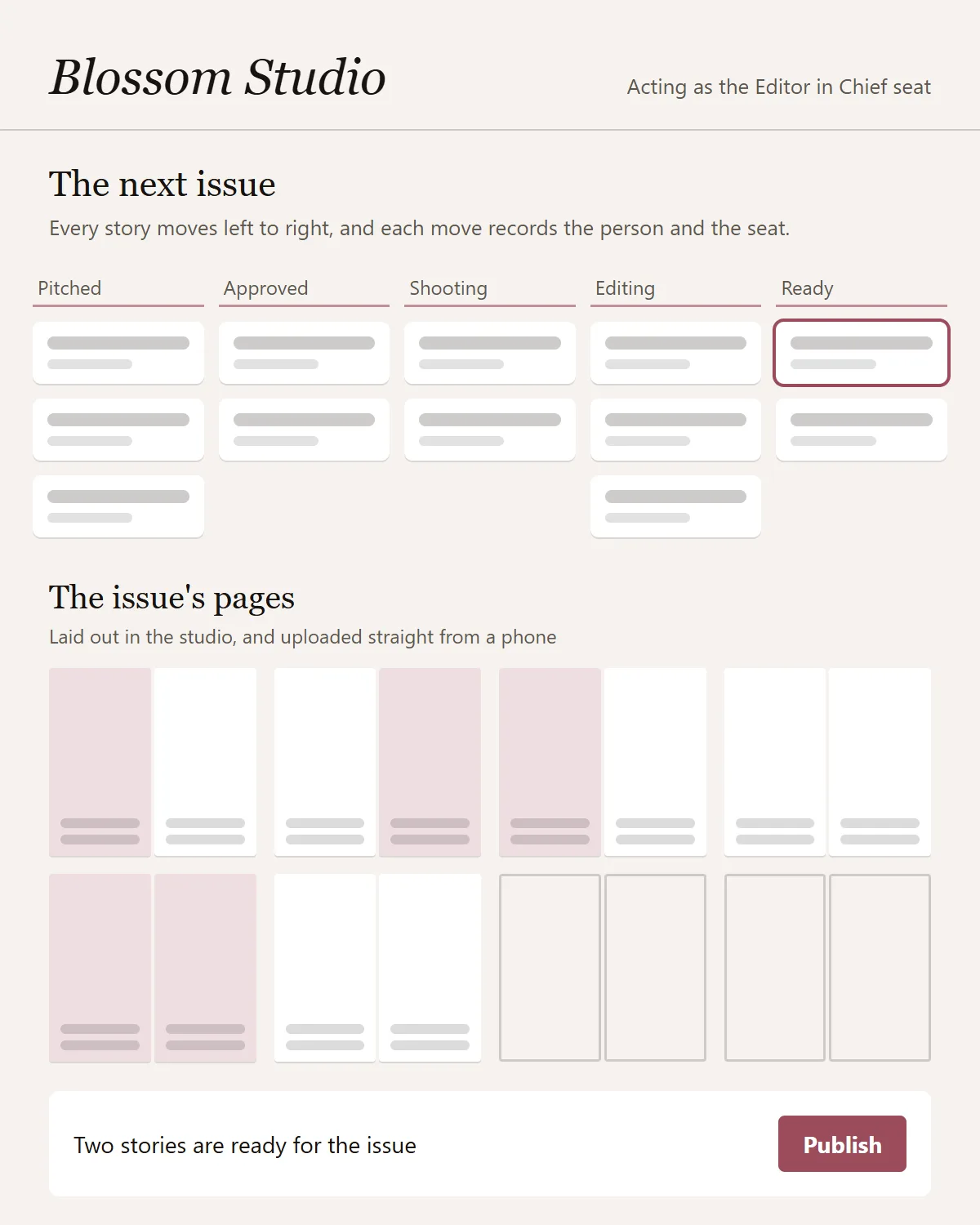
Drawn from the studio, which sits behind sign-in. Its purpose here is making each issue. Every story moves from pitched to approved, shooting, editing, and ready, and each move records the person and the seat. The issue’s pages are laid out in the studio and uploaded straight from a phone.
3Stories
Every story on the page was written, edited, and published by the magazine’s own staff, without touching code. What they save in the studio lives in the database, so a later update to the code can never undo it.
4The photo archive
Every photo on the site is kept in its version-controlled repository, stored off-site with its full history. No single laptop holds the only copy anymore.
5Seats that hand over
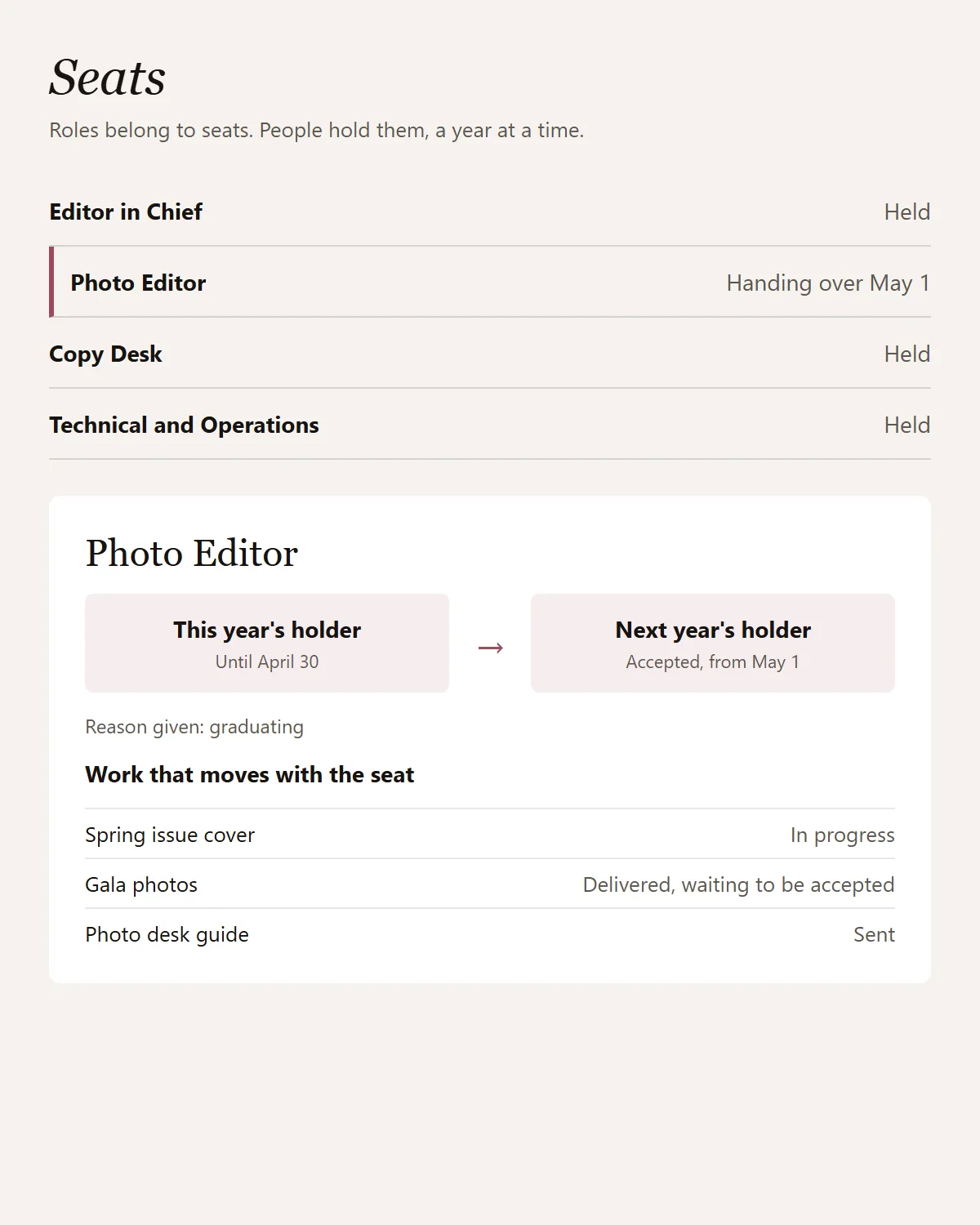
Drawn from the studio. Roles belong to seats, not people. Each seat carries its permissions and its work, and passes to next year’s holder on a set date once they accept, with the reason recorded. Someone holding two seats works as one at a time.
6The magazine’s identity
The palette and the typeface come from the magazine’s print identity, so the site and the printed issue look like one publication.
WhiteWarm paperInkBodoni Moda
From a tangle to two lanes
How an issue came together before the studio, and how it comes together now.
What changed
96% Saved on running costs every year
Hosting now costs nothing. Only the domain remains.
Publish anywhere whole issues, straight from a phone
Staff write and publish stories and lay out pages themselves. Nobody waits on a developer.
Protected archive every photograph, kept safe off-site
Every photo on the site is kept in a version-controlled repository, stored off-site with its full history. No single laptop holds the only copy anymore.
Full accountability every change traced to who made it
Each edit in the studio records the person and the seat they acted from. Repeated failed sign-ins lock the account, and the owner’s locks first.
Shown with permission
Shown under the software’s license, which keeps the right to show it as portfolio work.